What the Chalk Is Trying to Tell You Before You Order
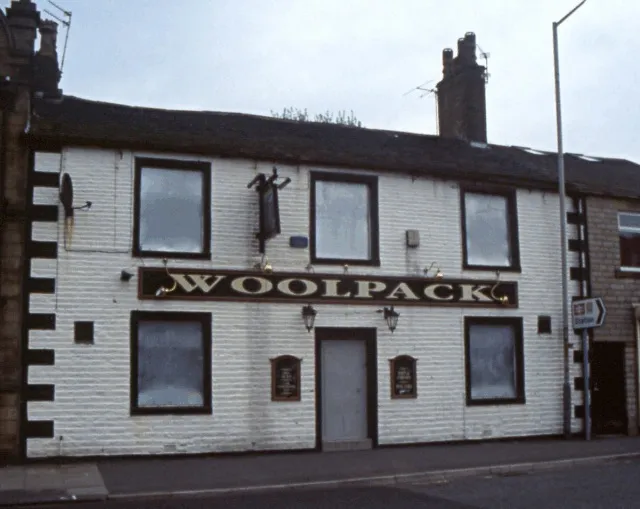
Photo: Bryan Tenny, CC BY-SA 2.0, via Wikimedia Commons
Walk into a pub and you are handed two menus, even if only one is printed. The laminated one is a promise of consistency: these dishes exist, at these prices, every day the kitchen opens. The specials board is something else. It is a note from the pass, written in chalk, often slightly smudged, occasionally with a word scrubbed out because the cook changed their mind or the last portion went over the bar. That is not a flaw. It is the point.
A specials board is a handshake, not a sales pitch. A handshake is a small agreement between two people who have just met: here is who I am, here is what I have got, let us see if this works. A sales pitch wants something from you before you have had a chance to think. The board should feel more like the former. It should tell you what the kitchen is excited about, what is in season, what arrived this morning and what the team would happily eat themselves after service.
The board is a working document
The first clue is not the wording. It is the condition. Chalk smudges, a tidy line through a sold-out dish, a price changed by hand, a scribbled note saying “until it runs out” — these are signs of a board that is being used rather than framed. A board with no crossings-out at eight in the evening is not automatically a bad sign, but it is worth asking whether it is really a specials board or a second printed menu wearing a rustic hat.
Too many crossings-out is not ideal either. If half the board has gone by early evening, the kitchen may have overcommitted or underprepared. But one or two honest deletions suggest a dish has been popular and the kitchen has not simply defrosted another batch to keep the chalk tidy. Pubs are not restaurants with a tasting counter; they are places where the plan meets the day. The board should show the join.
Provenance notes earn their ink
“Local” is one of the least useful words on a chalkboard. It can mean a farm down the road or a wholesaler with a van. “Fresh” is even weaker. What you want is a name, a place, or a season. “Borrowdale lamb”, “Cornish hake”, “game from the estate”, “this week’s mushrooms from the woods” — these are not guarantees of quality, but they are evidence that someone in the kitchen is paying attention.
Specific provenance also tells you what kind of cooking to expect. A board that names a breed of pig and offers it as a plain chop with mustard is making a different claim from a board that lists the same pig in a sticky barbecue glaze. Neither is wrong. One wants you to taste the ingredient; the other wants to show you a trick. The chalk usually gives the game away.
Chalked-on swaps show a point of view
A good specials board is not a random collection of dishes the kitchen can be bothered to make. It has a point of view. That might be as simple as using up a glut of courgettes in late summer or switching the printed pie’s filling to venison because the game supplier had a good week. It might be a fish dish that changes with the boats, or a pudding that appears only when the rhubarb is worth it.
The swaps matter more than the headlines. If the board simply repeats the main menu with an extra topping, it is probably there to nudge you towards a higher spend. If it offers a genuinely different dish — a braise, a whole fish, a suet pudding, a salad made with something that will not last the week — it is more likely to be a real special. You are looking for curiosity inside pub grammar, not a gastropub tasting menu in chalk.
A short field guide to ordering
Ask what is good. Not in a challenging way, just a normal question. Bar staff and waiting staff usually know which board dish has been flying out and which one the kitchen is quietly proud of. If nobody can tell you anything beyond “it’s on the board”, that is information too.
Order one special and one known quantity if you are unsure. A printed-menu staple gives you a baseline; the special gives you the kitchen’s personality. If both arrive well, you have found a pub that can walk and chew gum. If the special is brilliant and the fish and chips are tired, you have found a kitchen with a split personality.
Do not ignore the plainest thing on the board. A chalked-up soup, pie or plate of ham and eggs can tell you more about a pub than a complicated dish with three garnishes. Simple food has nowhere to hide. If the board is offering a stew made with cheap cuts and it tastes of long cooking, that is a better handshake than a swirl of something fancy on a plate.
Finally, mind the price against the effort. A board special at twenty-six pounds needs to feel like a main event, not a printed-menu dish with a sprig of watercress. A twelve-pound lunch special can be plain and generous and still be the best thing on the board. Value is not the same as cheapness; it is the sense that the kitchen has spent your money where you can taste it.
When the chalk is just decoration
Not every specials board is a conversation. Some are marketing dressed up in handwriting. If the board is immaculate, full of vague provenance and dishes that sound like they were workshopped by a committee, treat it as you would any other advert. If every special comes with the same list of fashionable ingredients, the kitchen may be following a trend rather than a supplier. If the board is simply a photocopy of the menu with “chef’s” added to the title, you have your answer.
None of this is a reason to be snooty. Pubs are businesses, and a board has to sell. But the best ones sell by telling the truth: this is what we have, this is what we are proud of, this is what we would order ourselves. That is a handshake worth taking. The rest is just chalk.