Cake Stall Economics: The Village Hall Rules Worth Borrowing for a Pub Kitchen
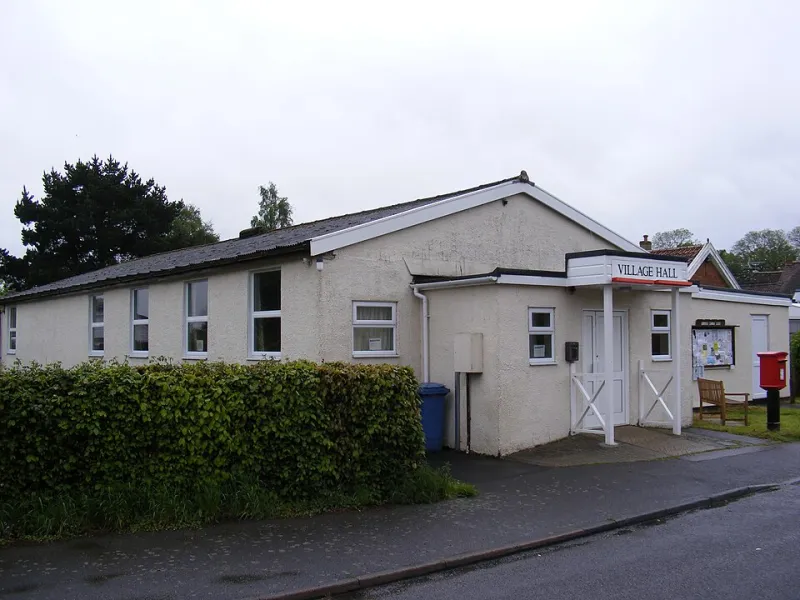
Photo: Geographer , CC BY-SA 2.0, via Wikimedia Commons
A fortnight ago I paid £3.50 for a bacon roll in a village hall. The roll was hot, the bacon was properly crisp, and the woman behind the trestle table said, 'Sauce is there, love, help yourself.' I ate it standing up, next to a tray of iced buns and a hand-written sign explaining that the Victoria sponge contained nuts. It was, by some distance, the most trustworthy food transaction I had made all month.
That is not a sentimental point about village halls. It is a value point about pub kitchens. The autumn fair — the church fete's indoor cousin — runs on a set of principles that many pubs have mislaid somewhere between the specials board and the QR code. None of them require bunting. All of them are worth borrowing.
The urn test: is the obvious thing ready?
The urn is the first thing you see at a village hall tea. It is on, it is hot, and someone is already pouring. Nobody asks you to wait twenty minutes for a bespoke infusion. The promise is simple: the thing you came for is ready, in quantity, at a fair price.
Apply that to a pub. Is the coffee machine on at noon? Is there enough gravy for the roasts that are actually selling? Can the kitchen put out a decent sandwich at 1pm on a Saturday without the bar staff apologising? The urn test is not about tea. It is about whether a pub has prepared for the obvious demand rather than the imaginary demand. A kitchen that runs out of the pie by 1.30 is not necessarily bad. A kitchen that has not worked out that Saturday lunchtime needs more pies than Tuesday supper is a kitchen that has not done its homework.
The cake table is an honesty check
Village hall cake tables are ruthlessly honest. Prices are written down. Ingredients are listed, often in biro. If someone's aunt made the flapjack, the sign says so. You know what you are buying before you hand over the cash.
Pubs could learn from that without turning the menu into a spreadsheet. The cake-table honesty check asks a simple question: does the description match the plate, and does the price make sense? If a menu says 'slow-cooked beef pie' and the pastry is pale and the filling is thin, the honesty check fails. If a pub charges £19 for a pie and cannot tell you what cut of beef is in it, that is not rustic mystery — it is a gap where trust should be.
This is not a demand for ingredient essays. It is a demand for plain dealing. A chalkboard that says 'beef pie, mash, greens — £16' and delivers exactly that is worth more than a paragraph about heritage and fire. Village halls understand that value is partly about information. Pubs forget it when they get self-conscious.
The queue is the menu
At a fete, the queue tells you what to order. The cake stall has a line, the bacon rolls have a longer one, and the table selling sad-looking gluten-free biscuits does not. Nobody has written a review. The crowd has simply voted with its feet, and the queue is the result.
In a pub, the same principle applies in gentler form. Watch what leaves the kitchen. Watch what the bar staff recommend when they are not reading from a script. Watch which specials get crossed off first. The queue-as-menu principle is not about blindly following the mob; it is about noticing where the kitchen's effort is going. If the carvery queue is steady and the plates look right, that tells you more than a laminated menu ever will. If the specials board is untouched at 8pm on a Friday, ask why.
Effort you can see
A village hall tea makes its labour visible. Someone sliced the ham. Someone buttered the scones. Someone cut the crusts off the sandwiches because that is what the occasion asks for. You can see the work, and that makes the price easier to accept.
Pubs do not need open kitchens to show effort, though they help. A carvery is visible effort. Hand-cut chips are visible effort. A proper jug of gravy brought to the table is visible effort. A dessert board with three actual puddings on it, rather than a list of nine and a shrug, is visible effort. The point is not performance. It is evidence. When a pub kitchen makes its work legible, the customer stops calculating and starts trusting.
Food for a crowd, not a camera
Village hall food is made for eighty people, not for a phone. The sandwiches are cut to be picked up. The cake holds its shape. The tea is hot enough to survive a queue. Nothing is plated with tweezers, and nothing needs to be.
Pub kitchens often lose this. A dish that looks superb on the pass can be a misery at a table of six when it arrives lukewarm, or when the kitchen can only send out two at a time. The crowd-first standard asks whether a menu works at scale without collapsing. Fewer garnishes, more consistency. A roast that can be carved and sent out in a rush. A pie that survives a busy service. A pudding that does not need a demo.
This is not an argument against ambition. It is an argument for ambition that survives contact with a full room. A pub that can feed a crowd well is doing something harder and more valuable than a pub that can plate one beautiful thing slowly.
What not to borrow
Do not turn the pub into pastiche. No compulsory bunting. No jam jars with chalk labels. No fake village-hall branding, and no pretending that a pub has the same overheads as a church hall run by volunteers. Village halls do not pay business rates in the same way, staff rotas in the same way, or VAT in the same way. The £3.50 bacon roll is a beautiful thing, but it is not a fair benchmark for a pub with a chef, a lease and a cellar.
Borrow the principles, not the aesthetic. Clear prices. Visible effort. Food that is ready for the people who actually turn up. A menu that tells the truth.
A four-question audit for your next pub
Before you order, ask yourself four things. Is the obvious thing ready and hot? Do the prices and descriptions match what is likely to arrive? Does the queue, the specials board or the bar staff point to where the kitchen is putting its effort? And can you see the work — or at least taste it?
If the answer is yes to three out of four, you are probably in a good pub. If it is yes to all four, you have found the village hall standard in a building with a licence. That is not nostalgia. That is value, plainly done. And it is still the best reason to detour.