Cold Bench, Warm Welcome: Auditing the Pub Garden After the Clocks Change
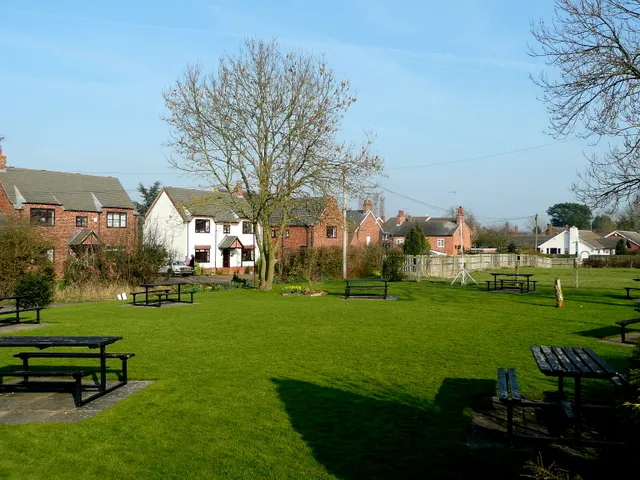
Photo: Jonathan Billinger, CC BY-SA 2.0, via Wikimedia Commons
There is a particular kind of November afternoon when the pub garden becomes the most honest room in the building. The hanging baskets are done, the grass has that flat, end-of-season look, and the picnic tables are either stacked away or waiting under a grey sky. Most people walk straight past and head for the fire. That is understandable. But the off-season garden is not simply a compromise. It is a useful audit.
A pub that still takes its outdoor space seriously in November is usually a pub that takes hospitality seriously full stop. Not because every garden needs a heater the size of a small aircraft, but because somebody has thought about the person who wants a pint in the fresh air, a plate on a solid table and a reasonable chance of feeling their fingers by the time the chips arrive. At Tavern Fayre, we are firm believers that the second season of the pub garden tells you more than the first.
The first test is the bench itself
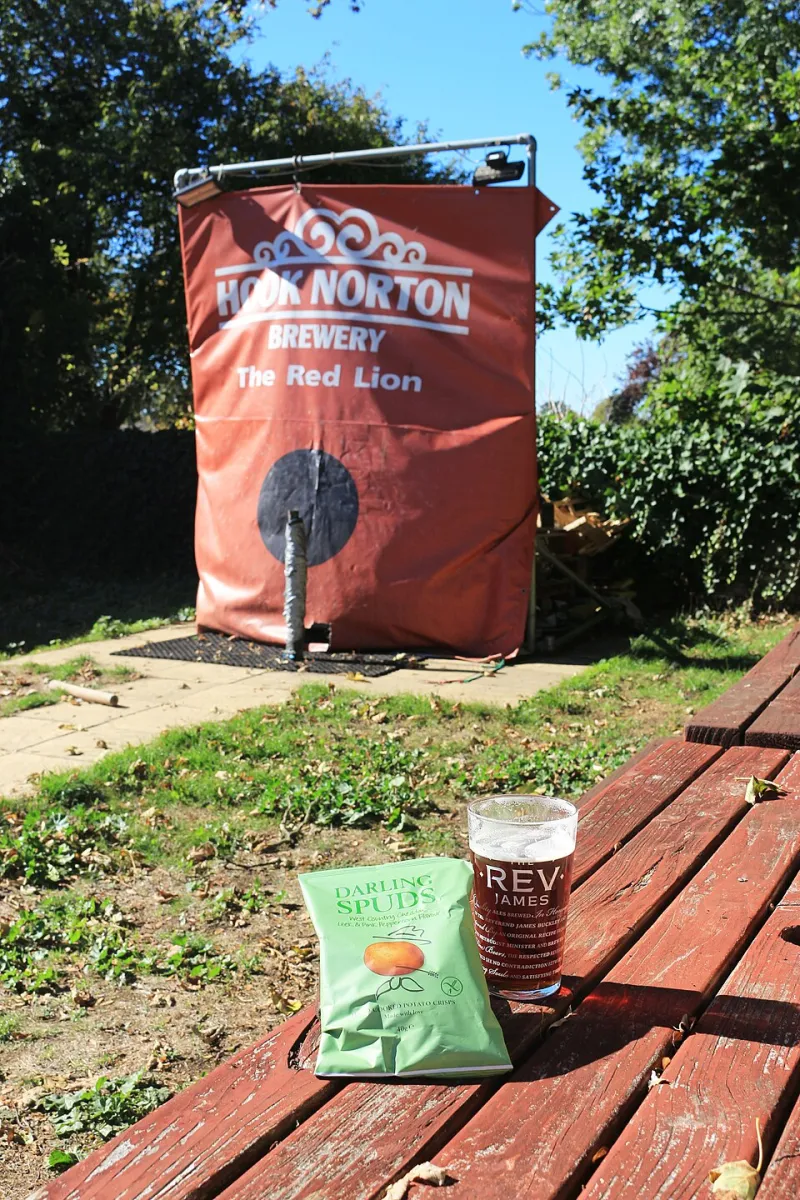
Start with the seat. Not the view, not the fairy lights, not the sign promising “covered and heated”. The bench. Is it dry? Has somebody wiped it, or is there a stack of towels by the door because the staff know the weather has been doing its worst? A damp bench is not a catastrophe — this is Britain, after all — but a pub that leaves every seat soaking and offers nothing to sit on is telling you something about the join between front of house and the great outdoors.
Look for the small practical moves. Cushions that are actually brought in overnight rather than left out to absorb a week of drizzle. A brush near the door. A couple of folded blankets that smell of clean laundry rather than a shed. None of this is glamorous. All of it is hospitality.
Heaters, blankets and the honesty of the setup
Patio heaters are easy to buy and easy to leave running in a corner like a decorative flame. The question is whether they are doing any work. A good off-season garden has heaters placed where people actually sit, not just where they look reassuring in a photograph. If the heat is only available at one end of a twelve-table terrace, the pub has not really opened the garden. It has opened a small, warm pen and left the rest as scenery.
Blankets deserve a closer look. A pile of thin fleeces by the door can be a lovely touch. A pile of damp, dog-haired throws that have been outside since October is a different message. The same goes for the menu: if a pub is still serving the full garden menu in November, brilliant. If it has trimmed things back, that is not automatically a bad sign. A smaller outdoor menu can mean the kitchen is being honest about the run to the pass, the wind and the likelihood of a plate going cold before it reaches table nine.
Shelter that works, not shelter that photographs
A pergola, an awning or a stretch of covered decking can transform a November lunch. But shelter has to do more than exist. Check the edges. Is the windbreak actually fixed, or is it flapping like a flag of surrender? Are the umbrellas up because they are useful or because nobody has taken them down since September? Does the roof drip directly onto the one dry bench?
This is where the off-season garden becomes a proper field guide to a pub’s attention span. A team that checks the drainage, clears the leaves and puts the dry seats where the shelter actually works is a team that will notice your underdone chips or your missing gravy. It is not about luxury. It is about whether the pub has looked at the space from the customer’s side of the table.
Watching the pass through the back door
One of the great pleasures of an outdoor table in November is the view of the kitchen’s back door. You see the rhythm. You see whether plates come out under cling film, whether someone is carrying two roasts across a wet patio like a tightrope walker, whether the cutlery arrives before the food or after the first grumble. You also see how the front-of-house team treats the garden: as a proper section, or as the place where the new starter gets sent when the indoor tables are full.
A kitchen that still sends a decent plate to the garden in November — hot, garnished, not apologetically small — is a kitchen with standards. A pub that quietly stops serving anything but drinks outside once the clocks change is making a choice, too. Neither is illegal. But only one of them feels like a pub worth the detour.
The bill, the blanket and the second pint
Off-season garden hospitality should not come with a surcharge. If the pub has made the space usable, that is part of the offer, not an add-on. The moment a menu starts charging extra for a blanket, a heater or the privilege of sitting under a damp awning, the goodwill drains away. The best version is simple: no fuss, fair prices, a dry seat and a pint that stays drinkable while you finish your pie.
The real test is whether you want a second pint. Not because you are trapped by the weather, but because the garden is genuinely pleasant in a woolly-hat, low-sun, early-dark sort of way. That is the second season. It is quieter, cheaper in spirit and often kinder to a lingering lunch than the packed days of July.
The verdict
A pub garden in November is not a compromise. It is a small, practical demonstration of how a pub treats the people who turn up when the weather is not doing them any favours. Look for the dry bench, the blanket that has been washed, the heater that is actually pointed at a table and the plate that still arrives with a bit of care. If you find all four, stay for pudding. You have found a pub that understands the garden is not a summer extra. It is part of the house.